Can't Sleep Because of Stress? Why Your Mind Won't Switch Off at Night

By Catriona Standingford MBACP, MNCPS (Acc.)

If you can’t sleep because of stress, it can often be because your mind is staying on watch over whatever feels unresolved in your life. Sleep tips can help take the edge off, but the change that lasts often comes from working through what’s keeping you on alert, and counselling can give you the time and support to do that.

Key points

  • Stress keeps your body on alert, so you may struggle to drift off or you may find yourself constantly waking up, or both.
  • Poor sleep makes stress harder to manage, and each feeds the other.
  • Sleep tips help, but if there are unresolved issues causing you stress, sleep tips alone rarely resolve the problem.
  • Counselling can help you work through what’s underneath, so that you can start sleeping again.
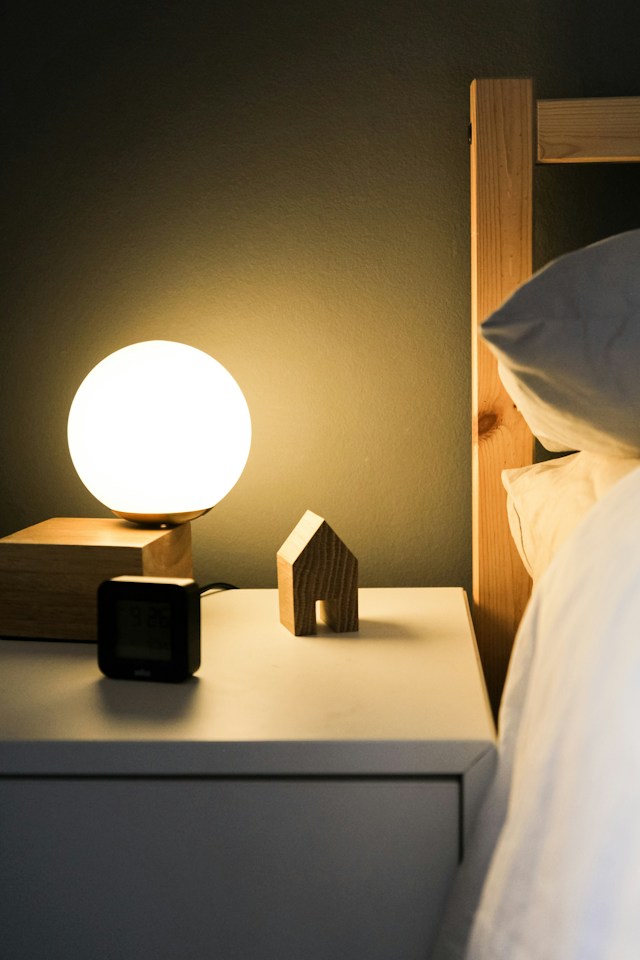
Glowing globe lamp, small wooden house and a digital clock on a bedside table
Photo by Julia on Unsplash

Why does stress stop you sleeping?

Stress stops you sleeping because it puts your body into a state of readiness, the opposite of what sleep needs. You may find your muscles feel tense and your mind won’t switch off. Everything can feel like an insurmountable problem, and so the cycle continues. I personally find that any problem feels far worse once the light goes off, or at 3am.

When your head hits the pillow

Or maybe you can’t get to sleep at all. You’re exhausted all evening, but the moment you lie down, your mind starts working overtime. And before you know it, an hour has gone by.

The middle of the night wake-up

Maybe you fall asleep easily enough, worn out, and then you’re wide awake at 3am. The email you sent, the conversation with your sister, the bill on the kitchen table – they all crowd your mind, and in the dark every one of them seems a thousand times worse.

It isn’t always the obvious stress

Sometimes it’s not the obvious looming work deadline that is keeping you from sleeping. It might be a relationship that has worn you down for years, a loss you haven’t grieved, or old trauma that taught your body it wasn’t safe to fully switch off. If racing thoughts are a big part of it, my post on understanding anxiety when your mind won’t switch off may help too.

Is not sleeping just a sleep problem?

Not usually. Not sleeping is often a sign that something in your life needs attention, a bit like a warning light on the dashboard. You can put tape over the light, but the engine still needs looking at.

Not sleeping is also very common. A survey of 2,000 UK adults by Opinium for the Mental Health Foundation, published in October 2025, found that the average adult gets good quality sleep on only three days a week, and one in three (34%) said worry and stress reduce their control over their sleep.

And it works both ways. Stress chips away at your sleep, then tiredness makes the next day heavier, with a shorter fuse and less patience. Round and round it goes.

When does a bad night become insomnia?

A bad night usually has an obvious reason – a late coffee, a noisy neighbour, a big day tomorrow – and you’re back to normal within a night or two. Insomnia is when sleep problems keep happening: finding it hard to drop off, waking several times in the night or too early, and still feeling tired, irritable and foggy the next day. The NHS calls it short-term insomnia when it lasts less than three months and long-term insomnia when it goes on for three months or more. Stress, anxiety and depression are among the most common causes.

Insomnia can also come with perimenopause and menopause. The NHS menopause guidance lists not being able to get to sleep or stay asleep as a symptom, and says sleep problems may be worse if you also have night sweats. Add the stress that often sits with this stage of life, from work to family, and it’s no wonder sleep suffers. If you think menopause is playing a part, it’s worth talking to your GP about your options from a physical symptom point of view.

How can you cope when you can't sleep because of stress?

You can start with small changes to your evenings, but the change that tends to last comes from looking at what the stress is actually about.

Give your worries somewhere to go before bed

You may find it helps to spend ten minutes, an hour before bed, writing down what’s on your mind, with one small next step to take beside each worry. It tells your brain the list is stored somewhere and doesn’t need to stay in the front of your mind all night.

Get up rather than wrestle with it

Whether you can’t drop off or you’ve woken in the night, if you’ve been lying awake for twenty minutes or so, it can help to get up, go to another room with a low light and do something dull, like folding washing. Lying in bed trying harder to sleep usually has the opposite effect.

What has helped me with insomnia

I have lived experience of insomnia myself, so I know how long those nights can feel. What helps varies a lot from person to person, but these are the things that have worked for me.

Writing down whatever is on my mind an hour before I go to sleep.  That can be one thing or ten, written on  a scrap piece of paper, in a notebook or on an app.  I keep it brief, writing a few sentences on what the worry is, and what the next step is in resolving it.  

Sleep meditation was recommended to me, and has been a huge help. I often listen to the recordings by Chibs Okereke on YouTube. Some of them run for 8 or more hours so can be with you all night if you wish.

Breathing techniques to help you nod off can help too. You might try breathing in for a count of four and out for a count of six or eight, as a longer out-breath can help your body reach a state of calm. Some people like 4-7-8 breathing (in through your nose for four, hold for seven, out through your mouth for eight) or box breathing (in, hold, out and hold, each for a count of four). If holding your breath feels uncomfortable, just leave the holds out.

And sometimes it’s about sound. I sometimes put the TV on in the background, turned down so low that I can’t make out the words, so it’s more of a low rumble than a program I’m paying attention to. I also sometimes use white, pink or brown noise from the Noise app (for iPhone or Android). Pink and brown noise are deeper and softer than white noise, closer to steady rain or a distant rumble.

Work through what’s underneath with a counsellor

Sleep tips on their own can sometimes be like bailing out a boat without fixing the leak. Notice what the night-time thoughts keep returning to – the same person, the same fear – because that’s often where things need to be explored in order to help resolve what is really going on. Talking to a counsellor gives you the space and support to explore it and process your thoughts and feelings in the daytime, so they aren’t waiting for you when you turn the light off, or at 3am. We work together, at your pace, to find the best way forward for you.

What if it's someone you care for who can't sleep?

If it’s your partner lying awake beside you, the most helpful thing is often to listen rather than to try and provide a fix. Chamomile tea is a kind suggestion, but it can leave someone feeling unheard. Asking “what’s been on your mind lately?”, and then letting them answer, can help.

If work is the main pressure, my post on workplace burnout and stress may be useful for both of you.

Frequently asked questions

Can stress cause insomnia?

Yes. Stress is one of the most common reasons for sleep problems, and if the stress carries on, the poor sleep often does too.

Why can’t I fall asleep when I’m stressed?

Stress keeps your body alert and your mind busy, so when you do lie down in the quiet, those thoughts see the chance to pile in. Winding down for an hour before bed can help.

Why do I wake up at 3am when I’m stressed?

Your body stays on alert through the night when you’re stressed, so it’s easier to surface from lighter sleep in the early hours, when worries feel bigger than in daylight.

What’s the difference between insomnia and a bad night’s sleep?

A bad night is a one-off, usually with a clear reason, and your sleep settles again quickly. Insomnia means you regularly have problems sleeping, and the NHS calls it long-term insomnia once it has lasted three months or more.

Can counselling help with stress-related sleep problems?

It can. Counselling doesn’t replace your GP’s advice, especially if this is a symptom of perimenopause or menopause, but it can help you work through the worries, relationships or experiences keeping your mind on high alert.

Finding support

If you’ve been struggling to sleep for a while and think it may be due to stress, or your head just feels full, talking it through may help. I’m a trauma-informed counsellor working with adults online across the UK and face to face in Chepstow, South East Wales. You can book a free 15 minute chat, with no pressure to continue.

If poor sleep has lasted for months or is affecting your daily life, it’s also worth speaking to your GP.

You can check my registration on the BACP Register and the NCPS Register, and it’s always worth checking that whoever you see is registered.

If you’re in crisis, contact Samaritans any time on 116 123, or call 999 in an emergency.

Last updated 16 November 2026

Want to talk about what’s keeping you awake?

If the same worries keep turning up at night, it may be time to give them some daytime attention. Get in touch for a free 15 minute chat about what’s going on, with no pressure to book anything afterwards.

Email me at cs@catrionastandingford.co.uk, send a WhatsApp or text message to 07564 069711, or use the form on my contact page. I see clients online and face to face in Chepstow.

Catriona Standingford, registered counsellor therapist online and in-person in Chepstow, South East Wales

Catriona Standingford MBACP MNCPS (Acc.)

Therapist | Counsellor | Coach | Educator

Catriona is a registered counsellor and therapist providing online and in-person therapy in Chepstow, South East Wales. Combining extensive personal lived experience with formal CPCAB qualifications, she specialises in trauma recovery, abuse, family estrangement, and LGBTQIA+ affirmative therapy.

Read Catriona's full bio, credentials, and practice approach →

Share this article:

My professional accreditations and credentials

Catriona Standingford Registered Member 420820 MBACP logo
Catriona Standingford Member of NCPS
Catriona Standingford Trauma Informed Practitioner Counsellor Therapy MBACP

Are you in an emergency?

Are you currently experiencing an emergency or major crisis? Are you considering serious self-harm? Please seek immediate help from your GP, visiting your nearest A&E or dialing 999.

If you would like to have someone listen to you, you can also contact the Samaritans immediately on 116 123.  They are available 24 hours a day, 365 days a year.