Why Do Adult Children Cut Off Their Parents?
A Therapist's Guide to Understanding Estrangement

Family estrangement is rarely about a single blow-up event or one bad phone call. In most cases it’s the result of a long pattern — unresolved harm, boundaries that were never respected, or a fundamental gap in values that could not be bridged. It’s also almost never a spur-of-the-moment decision. As a counsellor and therapist who works with both estranged adult children and the parents trying to understand what happened, I see how much thought and heart-wrenching deliberation usually sits behind a decision to go no contact — and how much pain sits on both sides of it.

In this post we will walk through the most common reasons adult children become estranged from their parents, what the research tells us about how these decisions are made, and what it means if you’re a parent hoping to reconnect.

What Estrangement Actually Is (and Isn't)

Family estrangement describes a significant reduction (‘low contact’) or complete breakdown (‘no contact’) in contact between family members, usually over a period of months or years, where at least one person has chosen the distance rather than it happening by circumstance. It’s different from simply not being close, or from a falling-out that resolves itself.

Researchers have described estrangement as a form of relational injury — a kind of trauma response to harm that built up over time rather than a single dramatic event. This is important as the question isn’t “what happened on the day they left”, but “what happened in the years before that.”

The Most Common Reasons Adult Children Go ‘No Contact’

Unresolved childhood harm or neglect

Some adult children carry their experience of neglect, emotional unavailability, or other forms of parenting from childhood that haven’t been talked about with their parents. As they build their own adult lives and perhaps create their own families, old harms that were never acknowledged let alone talked about can resurface, resulting in distance as a form of self-protection.

Boundary violations that continued into adulthood

For many, the issue isn't what happened in childhood but what kept happening after. Perhaps a parent who continued to overstep — dismissing a partner, undermining parenting decisions, or refusing to respect stated boundaries — can push an adult child toward estrangement not out of anger, but out of exhaustion and the feeling that there is no other option.

A parent's response to identity, partner, or life choices

Rejection relating to a child's sexuality, gender identity, choice of partner, or major life decisions is a painful and common experience leading to estrangement. When a parent is unwilling or unable to offer acceptance, many adult children conclude that the relationship isn't safe.

Addiction or untreated mental illness in the family

Where a parent's addiction or untreated mental health condition has caused ongoing instability or harm, adult children sometimes step back as a form of protecting their own physical and mental wellbeing.  This can be particularly true once they have children of their own.

Divergence in values, politics, or religion

Deep and on-going disagreement over values, whether religious, political, or otherwise, can weaken a relationship gradually, especially where the differences relate to how each person believes the other should live.

Protecting their own children

For adult children who are now parents themselves, estrangement is sometimes less about their own history and experiences, and more about protecting their kids from a dynamic they've decided isn't healthy for them to be around.
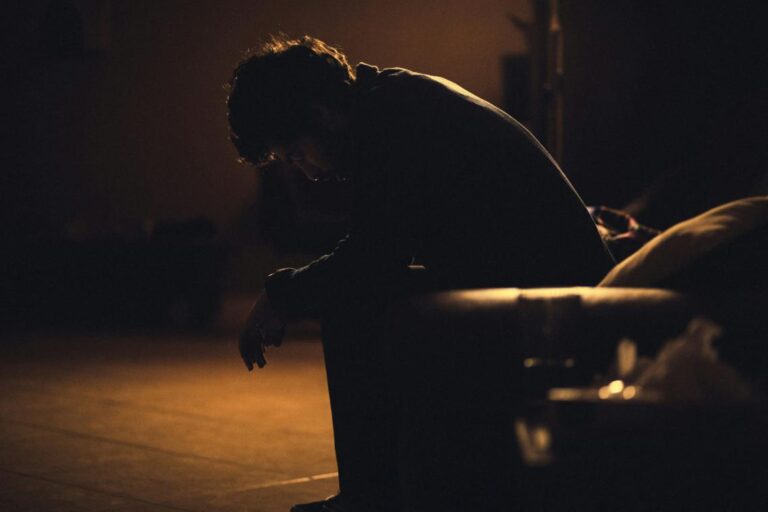

person in a dark room leaning forward in their chair with their head in their hands
Photo by Gadiel Lazcano on Unsplash

It's Rarely a Snap Decision

One of the most common things I hear from parents is that the estrangement “came out of nowhere.”  This rarely turns out to be true — even when it feels that way. Most adult children describe years of trying to raise concerns, set boundaries, or repair the relationship before choosing to distance themselves from the relationship. Going ‘no contact’ is usually a last resort.

This doesn’t remove or invalidate the pain of the parent on the receiving end.  However understanding that the decision is often the conclusion of experiences and struggles over a long period of time can move the thought process away from “why did this happen so suddenly” and towards “what was I missing along the way”.  Being curious and looking at it from this viewpoint can be emotionally difficult, but much more productive if reconciliation is ever going to be possible.

What This Means for Parents Hoping to Reconnect

If you’re a parent trying to understand or repair an estrangement, a few things tend to help more than others.  Working out how to acknowledge your child’s experience rather than being defensive, resisting the urge to push for a timeline or explanation before your child is ready, and being willing to sit with discomfort about your own part in what happened — even if you don’t yet fully understand it. Reconciliation, where it happens, is almost always slower than either side would like, and the path tends to have many curves and bends rather than be straight.

How Therapy and Counselling Can Help — Whichever Side You're On

Whether you’re the one who chose distance or the one trying to understand it, therapy and counselling offers a safe space to process the grief, guilt, anger, and confusion that estrangement tends to bring up — without judgment and without rushing you toward a particular outcome. My role isn’t about deciding who was right, it’s about helping you understand what happened clearly enough to move forward, whatever that looks like for you.

If you’re navigating a family estrangement and would like support, do book a free 15-minute chat with me so we can talk through how we can work together and how I can help.  I can work with you either online or in-person.

Catriona Standingford, registered counsellor therapist online and in-person in Chepstow, South East Wales

Catriona Standingford

Therapist | Counsellor | Coach | Educator

Share this article:

My professional accreditations and credentials

Catriona Standingford Registered Member 420820 MBACP logo
Catriona Standingford Member of NCPS
Catriona Standingford Trauma Informed Practitioner Counsellor Therapy MBACP

Are you in an emergency?

Are you currently experiencing an emergency or major crisis? Are you considering serious self-harm? Please seek immediate help from your GP, visiting your nearest A&E or dialing 999.

If you would like to have someone listen to you, you can also contact the Samaritans immediately on 116 123.  They are available 24 hours a day, 365 days a year.