Why Do I Stay in Toxic Relationships?

Many of us stay in relationships that make us feel hurt and confused, that are painful and emotionally draining.  It’s not because we want to suffer, but because there are powerful psychological and nervous‑system forces that make leaving incredibly difficult. This doesn’t mean we are stuck.  It means we can make sense of this and take the steps needed to leave.

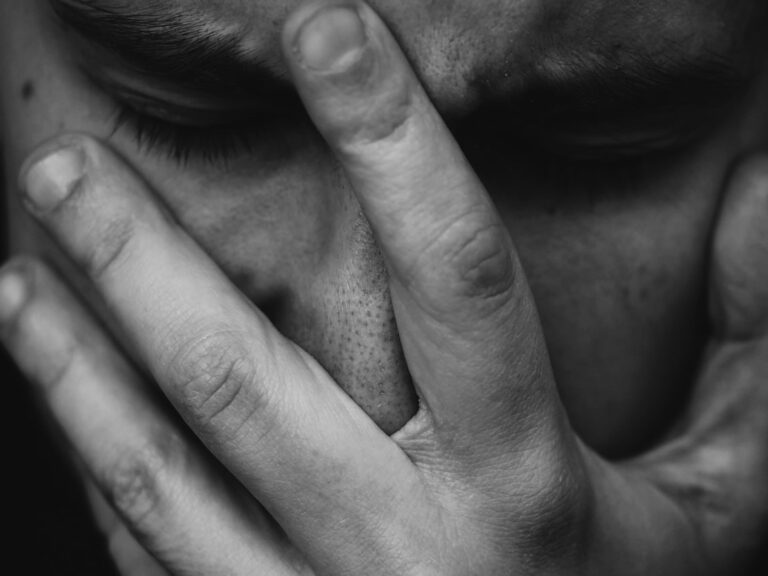
Person in a toxic relationship hiding their face in despair
Photo by Adrian Swancar on Unsplash

Attachment Conditioning

One of the biggest reasons people stay goes all the way back to our childhood and something called attachment conditioning. If your childhood was filled with inconsistent love, emotional unpredictability, or a parent whose mood dictated the atmosphere, your nervous system may have learned that relationships are intense, unstable, and hard to read.  If you then find yourself in a relationship with someone who alternates between affection and withdrawal, you may well find that your body automatically activates the survival strategies you used as a child.  These could include people‑pleasing – “I want them to like me” and therefore doing all you can to please them and gain approval, and fawning – “If  I don’t please them, I am in danger”. You’re not consciously making these choices, they are deeply wired responses designed to keep you safe.

Trauma Bond

You might also stay because you can never be sure how an action is going to be responded to.  Your partner unpredictably switches between affection and coldness, therefore leaving you in a state of uncertainty.  But it is this unpredictability which creates a chemical dependency which makes the relationship hard to leave.  The nervous system becomes addicted to the “high” of the good moments and creates what is called a trauma bond.  This is a powerful emotional attachment formed through repeated cycles of harm and repair.  It’s not the pain that you don’t want to leave, it’s the relief that comes after.

Self-worth

You may also stay because of low self‑worth formed by experiences in your past. If you’ve been criticised, dismissed, or made to feel “too much” or “not enough”, you may start to believe that this is who you are and you cannot ever be treated any better.  Toxic partners can reinforce these beliefs, intentionally or not, and so over time you may begin to doubt how you see yourself, minimise your needs, or feel guilty for wanting more.

Uncertainty

It can also be incredibly scarey thinking about leaving.  Starting over can feel almost impossible especially if you have children together and/or are financially dependent.  Many people stay because they’re trying to survive.  Leaving a toxic relationship creates uncertainty, and as humans are wired to avoid uncertainty it can feel almost impossible to leave even when you know the relationship is unhealthy.  The familiar can feel safer than the unknown.

“You're not broken.”

Hope

And the hope that things will change ‘this time’ can keep us in the relationship.  Hope that things will improve. Hope that our partner will change.  Hope that if you communicate better, try harder, change yourself, or simply let time pass, that the relationship will get better.  Hope often keeps us right where we are for a long time.

If this sounds like you, you’re not broken.  You are stuck in a place where many of us have been, and where many continue to be.  You are a human, shaped by your past, your nervous system, and our deep need for connection as humans.  It is entirely understandable and doesn’t mean you are in any way a failure, weak or ‘less than’. 

We can work together to look at how past events got you to where you are today.  I can help you learn how to calm your automatic bodily responses and reduce anxiety and panic.  We can look at your situation together and begin to imagine something different.  We can work on where you want to go next, and how you will get there.

Catriona Standingford, registered counsellor therapist online and in-person in Chepstow, South East Wales

Catriona Standingford

Therapist | Counsellor | Coach | Educator

Share this article:

My professional accreditations and credentials

Catriona Standingford Registered Member 420820 MBACP logo
Catriona Standingford Member of NCPS
Catriona Standingford Trauma Informed Practitioner Counsellor Therapy MBACP

Are you in an emergency?

Are you currently experiencing an emergency or major crisis? Are you considering serious self-harm? Please seek immediate help from your GP, visiting your nearest A&E or dialing 999.

If you would like to have someone listen to you, you can also contact the Samaritans immediately on 116 123.  They are available 24 hours a day, 365 days a year.